
ESA Letter Verification ID: What It Is and How It Works
Verification is what turns "is this letter real?" into a quick, factual check. A discreet verification ID in the customer portal lets a landlord confirm your ESA letter is genuine — without ever seeing your medical details. Here's what it is, whether you need one, and how it's used.

Do ESA letters need a way to be verified?
A verification feature isn't legally required for an ESA letter to be valid — validity comes from a licensed provider evaluation. But it's very helpful: it lets a landlord confirm the letter is genuine quickly, which cuts down doubt and back-and-forth.
Eligible PawTenant orders have a verification ID in the customer portal that confirms the letter was actually issued by the provider. It proves authenticity only — it does not reveal your diagnosis or medical records. Every letter carries one, alongside the provider's verifiable license details.
The basics
What ESA letter verification is
A verification ID in the customer portal
After a qualifying PawTenant ESA order is finalized, its verification ID appears only in the customer's portal. Entering it at pawtenant.com/verify opens the verification result.
A way to confirm authenticity
A landlord can use it to confirm the letter is genuine and was actually issued — not edited, copied, or invented.
Privacy by design
It confirms the letter is real and the provider is licensed. It does not reveal your diagnosis, treatment, or any clinical detail.
Pairs with the provider license
Alongside the provider's license number and the public NPI registry, the portal verification ID gives a landlord a fast, reliable check.
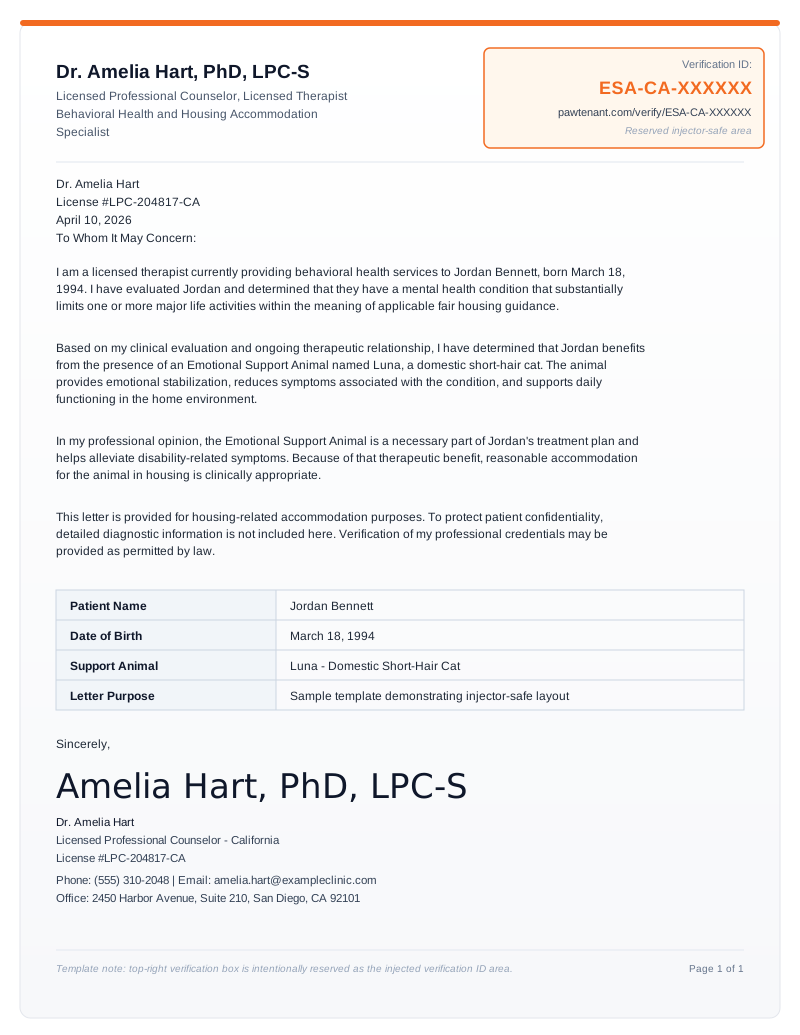
Where to find the verification ID
The verification ID is shown only in the customer's portal, separate from the licensed provider's name, license number, and signature — while the separate portal ID lets a landlord confirm it at a glance.
- Unique to your provider-issued letter.
- Lets a landlord confirm the letter is genuine.
- Never reveals your diagnosis or medical records.
Sample letter — names and details are placeholders.
In practice
How a landlord verifies your letter
Find the verification ID in the customer portal
The verification ID appears only in the customer's portal. The customer may share it with a landlord, who enters it at pawtenant.com/verify.
Confirm it's genuine
Entering the ID opens PawTenant's verification result, confirming the letter was issued — not fabricated or altered.
Check the provider license
They can also confirm the named provider is licensed via the license number or the public NPI registry.
See authenticity, not records
Verification returns only that the letter is genuine. Your medical information is never disclosed in the process.
For the full walkthrough, see how to verify an ESA letter and the landlord-facing ESA letter verification page.

A portal verification ID makes a landlord's check effortless
When a landlord can confirm your letter through a portal ID lookup, you skip the suspicion and the document requests. The portal ID — paired with a licensed provider's name and license number — proves the letter is real while keeping your health information completely private.
- Confirms the letter is genuine and provider-issued.
- Never reveals your diagnosis, treatment, or records.
- Landlord denial support if a valid request is pushed back.
ESA Letter Pricing
Clear, upfront pricing — from $115
Pay by card, or choose Klarna at checkout — subject to eligibility and Klarna payment terms. A licensed provider reviews your assessment — approval is not guaranteed.
One-time
Valid for 1 year. Pay once, no auto-renewal.
- Licensed provider review
- Money-back if not approved
- Verifiable, housing-ready letter
- Free Pet Care Planner by PawTenant
Annual
Renews automatically. Save vs. one-time every year.
- Licensed provider review
- Money-back if not approved
- Verifiable, housing-ready letter
- Free Pet Care Planner by PawTenant
PawTenant also supports PSD (Psychiatric Service Dog) evaluations for qualifying individuals where clinically appropriate. PSD documentation requires disability-related task training and is different from ESA documentation.
ESA letter verification ID: FAQ
A verification feature isn't legally required for an ESA letter to be valid — validity comes from a licensed provider evaluation. But it is very helpful: it lets a landlord confirm the letter is genuine quickly, which reduces back-and-forth and doubt. PawTenant provides a verification ID in the customer portal for exactly this reason.
Get a letter a landlord can verify
Connect with a licensed provider. If you qualify, your housing-focused ESA letter includes a portal verification ID a landlord can enter — with a refund if you don't qualify.
Start ESA EvaluationLast reviewed June 17, 2026 · PawTenant editorial team
Keep reading
Step-by-step verification for tenants and landlords.
Read moreShare the portal verification ID to help confirm it's genuine.
Read moreThe elements a housing letter must include.
Read moreWhat a landlord can reasonably request — and can't.
Read moreThe landlord's side: what to review and verify.
Read moreThe full apartment ESA housing guide.
Read moreNeed PSD documentation instead?
A Psychiatric Service Dog (PSD) is different from an emotional support animal — it involves disability-related task training and is for qualifying individuals. If a service dog fits your situation better, start there instead.
Educational information, not legal or medical advice. PawTenant connects you with licensed mental health providers. Whether an ESA or PSD is appropriate is decided by a licensed provider after a real evaluation — approval is never guaranteed, and a valid letter supports but does not guarantee a landlord’s decision. For your specific situation, consult a qualified professional or your state agency.
Support animal housing rules changed in 2026
HUD's federal enforcement approach changed, but state law, housing type, Section 504, private legal rights, and individual facts may still matter. PawTenant helps customers understand their options through licensed, state-aware support-animal documentation — issued only when clinically appropriate.
Educational information only — not legal advice. PawTenant does not certify or train service animals, and approval depends on your housing provider, state law, housing type, and individual facts.