
Can a Landlord Reject an ESA Letter?
Worried your landlord can say no? A landlord can deny an emotional support animal in only limited, individualized situations — not because of a no-pet policy, breed, or size. Here's when a request can be refused, when it generally can't, and how to respond with a verifiable letter.

Can a landlord reject an ESA letter?
A landlord can deny a reasonable-accommodation request in limited situations — for example, if the specific animal would be a direct threat to safety or cause substantial property damage that can't be reduced, or if the documentation doesn't reasonably support a disability-related need.
A landlord generally cannot reject an ESA based only on a no-pet policy, breed, size, or weight. Under the Fair Housing Act a housing provider must consider the request — that is not the same as being required to accept every request, and no service can guarantee a landlord's decision.
Valid vs invalid reasons
When a landlord can & can't deny an ESA
General Fair Housing guidance — not legal advice. Rules can vary by state and locality.
A landlord generally CAN deny if…
- The specific animal would be a direct threat to others' health or safety that can't be reduced by another reasonable measure.
- The specific animal would cause substantial physical damage to property that can't be reduced.
- The documentation doesn't reasonably support a disability-related need, or the request is unreasonable for that property.
- Granting the request would impose an undue financial and administrative burden, or fundamentally alter the housing.
A landlord generally CANNOT deny for…
- A blanket no-pet policy — an approved assistance animal is not treated as an ordinary pet.
- Breed, size, or weight limits applied on their own.
- Refusing because you won't pay pet rent, a pet deposit, or pet fees for an approved ESA.
- Demanding you "register" or "certify" the ESA, or buy an ID card or vest.
Already been told no? See how to respond to an ESA letter denial and landlord denial support.
What landlords look for
What makes an ESA letter hard to reject
A verifiable letter from a licensed provider gives a landlord far less room to push back.
A named, licensed provider
The letter names the mental health professional who evaluated you, with their license type, number, and state — not an anonymous "care team."
Housing accommodation language
It frames a reasonable-accommodation request for housing under the Fair Housing Act — the right framing for a landlord to act on.
A recent issue date
Housing ESA letters are generally treated as current for about 12 months, so a recent date carries more weight.
A way to verify
Provider license details and, on PawTenant letters, a discreet verification QR code so a landlord can confirm the letter is genuine.
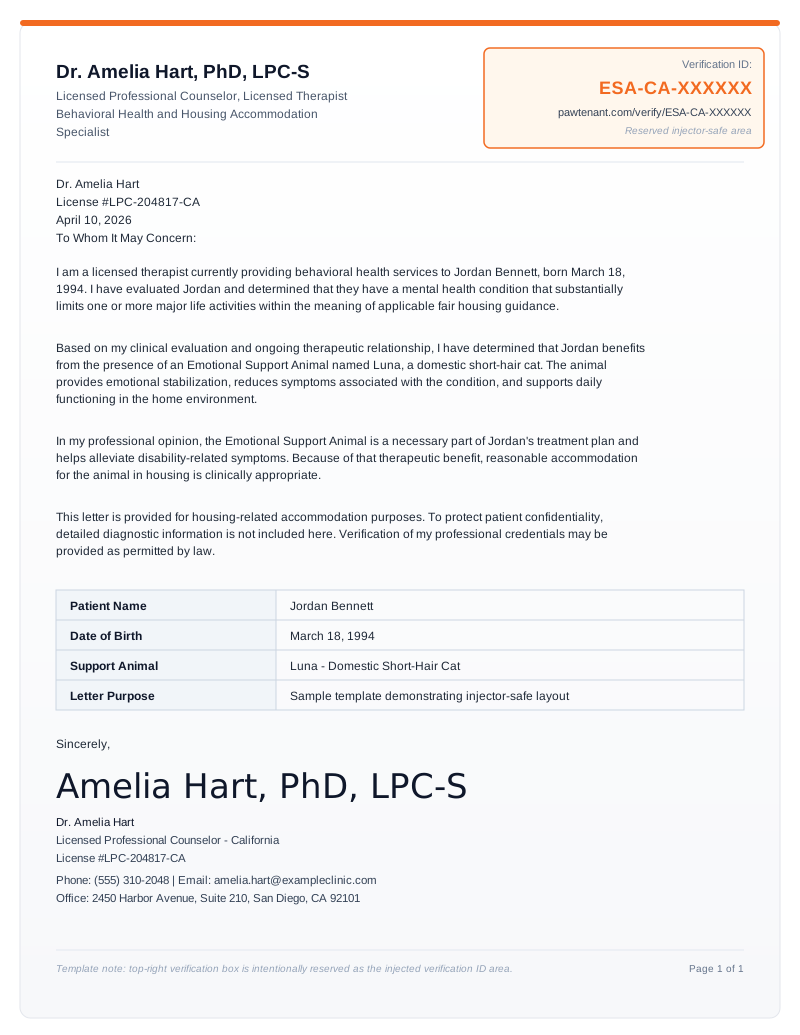
A verifiable letter looks like this — from a licensed provider, with verification details. Sample.
Tenant checklist
If your landlord pushes back
Keep it calm and in writing
Ask the housing provider, in writing, for the specific reason for the denial. A written record helps if you need to follow up.
Re-send a verifiable letter
Make sure your letter names a licensed provider, is recent, and is verifiable. Offer the verification path so they can confirm authenticity.
Pair it with a clear request
Send a short written reasonable-accommodation request alongside the letter, so the landlord has a request they're required to consider.
Use landlord denial support
If a valid request is pushed back, PawTenant offers landlord denial support to help you respond — there are calm next steps.

A verifiable letter is your best answer to a no
The strongest response to a landlord's pushback is a recent letter from a licensed provider that names them, supports a disability-related need, and can be verified — paired with a short written accommodation request. That gives a housing provider a request they're required to consider.
- Letter from a provider licensed in your state, after a real evaluation.
- A verification QR code a landlord can scan — no medical details exposed.
- Landlord denial support if a valid request is refused.
ESA Letter Pricing
Clear, upfront pricing — from $115
Pay by card, or choose Klarna at checkout — subject to eligibility and Klarna payment terms. A licensed provider reviews your assessment — approval is not guaranteed.
One-time
Valid for 1 year. Pay once, no auto-renewal.
- Licensed provider review
- Money-back if not approved
- Verifiable, housing-ready letter
- Free Pet Care Planner by PawTenant
Annual
Renews automatically. Save vs. one-time every year.
- Licensed provider review
- Money-back if not approved
- Verifiable, housing-ready letter
- Free Pet Care Planner by PawTenant
PawTenant also supports PSD (Psychiatric Service Dog) evaluations for qualifying individuals where clinically appropriate. PSD documentation requires disability-related task training and is different from ESA documentation.
Can a landlord reject an ESA letter? FAQ
A landlord can deny a reasonable-accommodation request in limited situations — for example, if the specific animal would be a direct threat to others' safety or cause substantial property damage that can't be reduced, or if the documentation doesn't reasonably support a disability-related need. A landlord generally cannot reject an ESA based only on a no-pet policy, breed, size, or weight. Each request is reviewed individually, and no service can guarantee a landlord's decision.
Get a verifiable, housing-focused ESA letter
Connect with a licensed provider. If you qualify, you'll receive a verifiable ESA letter built for housing accommodation requests — with a refund if you don't qualify.
Start ESA EvaluationLast reviewed June 17, 2026 · PawTenant editorial team
Keep reading
The elements that make a housing letter hard to reject.
Read moreWhat a landlord can reasonably request — and can't.
Read moreDoes a no-pet policy apply to an emotional support animal?
Read moreCalm steps if a landlord says your letter isn't valid.
Read moreMake sure your letter is real and verifiable.
Read moreWhat a landlord can and can't ask to review.
Read moreYour rights and denial support, by state.
Read moreThe same question for a psychiatric service dog.
Read moreNeed PSD documentation instead?
A Psychiatric Service Dog (PSD) is different from an emotional support animal — it involves disability-related task training and is for qualifying individuals. If a service dog fits your situation better, start there instead.
Educational information, not legal or medical advice. PawTenant connects you with licensed mental health providers. Whether an ESA or PSD is appropriate is decided by a licensed provider after a real evaluation — approval is never guaranteed, and a valid letter supports but does not guarantee a landlord’s decision. For your specific situation, consult a qualified professional or your state agency.
Support animal housing rules changed in 2026
HUD's federal enforcement approach changed, but state law, housing type, Section 504, private legal rights, and individual facts may still matter. PawTenant helps customers understand their options through licensed, state-aware support-animal documentation — issued only when clinically appropriate.
Educational information only — not legal advice. PawTenant does not certify or train service animals, and approval depends on your housing provider, state law, housing type, and individual facts.