A psychiatric service dog letter is documentation from a qualified healthcare professional that may describe a person's mental health condition and the clinical need for a service dog. Depending on the situation, a licensed psychologist, psychiatrist, therapist, or other qualified professional may evaluate whether this documentation is appropriate.
A PSD letter is not the same as a service dog certificate, registration, or proof of task training. The ADA does not require psychiatric service dogs to carry a particular letter, wear a special vest, or receive professional certification. The dog's disability-related training and the applicable legal requirements determine whether it qualifies as a service animal.
A psychiatric service dog can assist a handler with a mental health disability by performing trained actions that help manage symptoms or complete daily activities. Examples include interrupting a panic episode, providing a trained response to dissociation, or reminding a handler to take medication.
This differs from an emotional support animal (ESA). An ESA can provide comfort through companionship, but it does not need specialized task training. ESAs may qualify for reasonable accommodation in housing under applicable fair housing rules, while ADA public-access rights generally apply to qualifying service dogs rather than ESAs.
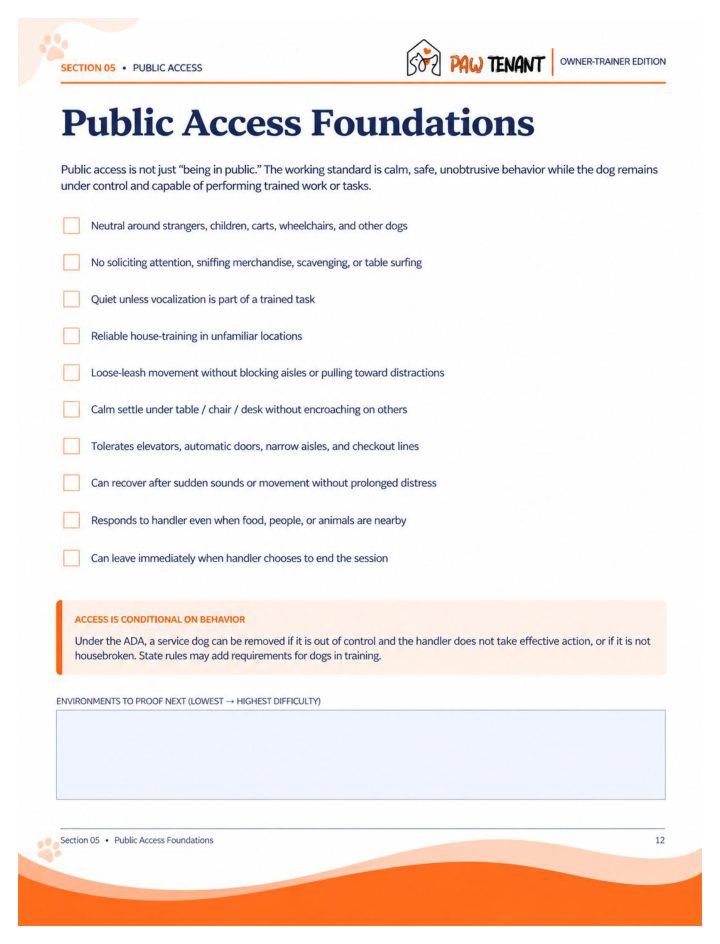
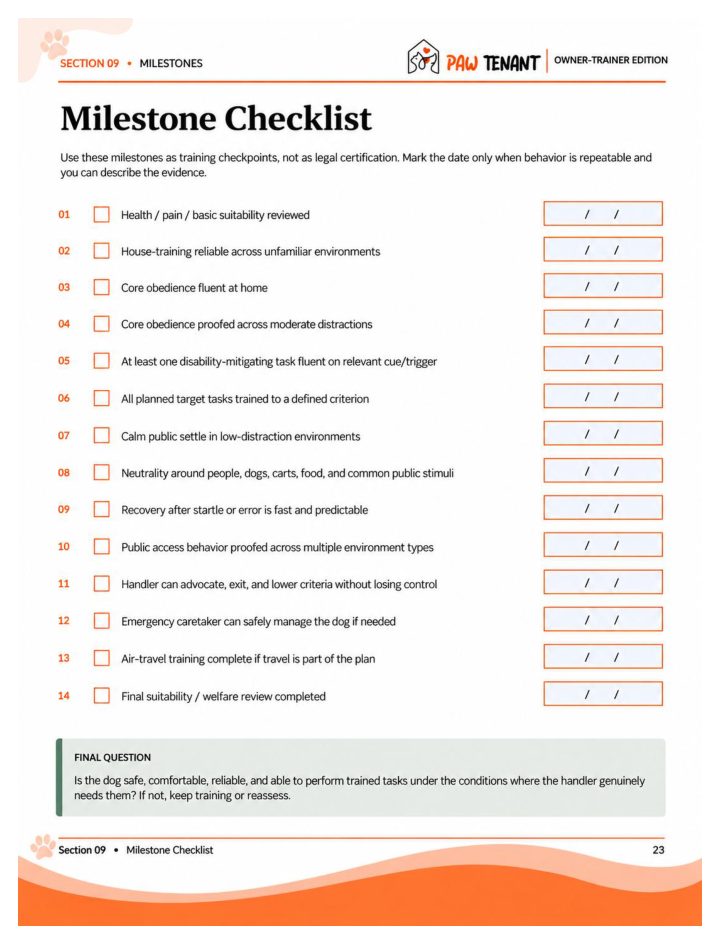
Good to know: A psychiatric service dog may be owner-trained. Professional training and a government-issued certification are not required under the ADA. The dog must still be trained to perform disability-related tasks and meet applicable behavior and control requirements.
To understand the distinction, visit PawTenant’s guide to all about service dogs and the comparison of service animals vs. emotional support animals.