A rabbit can offer companionship without a guaranteed outcome
A rabbit may be part of a person's emotional-support arrangement, but choosing the species does not automatically establish a disability-related need or secure housing approval. The useful question is whether this particular relationship fits your circumstances, whether professional documentation is appropriate, and whether you can meet the animal's needs. A rabbit's role, an ESA letter and a housing decision are three separate matters. Start with those distinctions before buying anything or bringing a new animal home.
This guide focuses on domestic rabbits rather than treating every unusual pet as interchangeable. Rabbits have their own feeding, handling and social needs. A person who enjoys quietly observing an animal may want a different relationship from someone seeking frequent physical contact. Think about what companionship means to you in everyday life, including difficult days, and discuss that honestly with the professional assessing your situation. There is no need to exaggerate what your rabbit does.
What emotional support means in an individual evaluation
An enjoyable bond with a pet is not, by itself, an assessment outcome. A professional evaluation considers the person's circumstances rather than awarding a title to an animal because it is affectionate or quiet. Prepare to explain your concerns, current care and the practical role your rabbit has in your life. Let the provider decide whether documentation is appropriate. Our guide to getting an ESA letter explains the process and questions to ask before starting.
Avoid promises that a rabbit will treat a particular diagnosis or replace existing care. The NIH's overview of human-animal interaction research (source 1) describes mixed findings and emphasizes that different people may benefit differently. General pet research is not proof of a specific therapeutic outcome from rabbits. Describe your actual experience rather than borrowing a list of symptoms or expected benefits from an advertisement. Keep working with your own care team when discussing changes to treatment.
Registration and certification are not the same as documentation
A seller can place your rabbit's name in a private database without assessing you. That may produce a number, card or certificate, but it does not establish what a clinician would conclude. Ask what the purchase includes, who performs an evaluation and what happens when documentation is not appropriate. The ESA letter and registration comparison helps separate these offers without treating an impressive-looking document as proof of a service it never provided.
For a concrete state example, Florida Statutes section 760.27 (source 2) says Internet registration, cards, patches and similar certificates are not sufficient by themselves to establish disability or disability-related need. That example is not a nationwide checklist. Check the rules relevant to your location and request. Buying accessories also does not turn a rabbit into a task-trained service dog or decide whether your housing provider must approve an accommodation.
Ask about housing before making assumptions
If you already live with a rabbit or plan to move, ask how the housing provider receives accommodation requests. Keep the request, response and any documents organized. Explain the animal you actually have and ask what information is needed to consider your circumstances. Do not assume a website's statement that rabbits are always approved applies to your property. A clinical evaluation and a housing provider's review have different purposes, and the outcome is not guaranteed by paying for a letter.
Use current information. HUD has withdrawn earlier guidance, as documented in its Federal Register notice (source 3), so older articles quoting guidance as a permanent nationwide rule need checking. State law and the particular property can matter. If there is a dispute, seek qualified local advice rather than relying on a sales promise. Our ESA documentation guide for renters provides a starting point for practical questions without replacing individual legal advice.
Build a realistic home and care plan
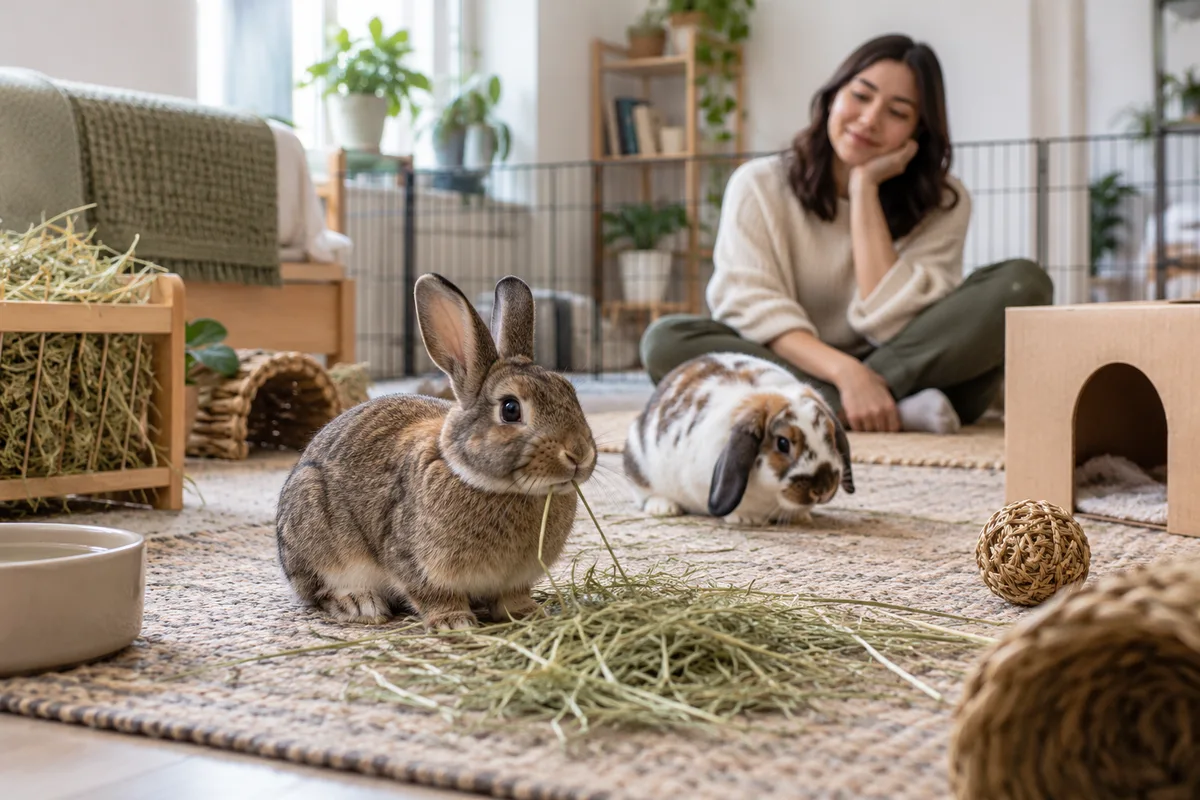
Before choosing a rabbit, map the space available for its enclosure, supervised exercise, supplies and cleaning. The RSPCA's indoor rabbit guidance (source 4) highlights rabbit-proofing, hiding places and protection from hazards such as electrical wires. Translate that into a concrete plan for your own home. Identify which areas the rabbit can safely use and how you will prevent access to unsafe materials. A small body does not make an animal a low-effort commitment.
Plan daily work, not just the attractive parts of ownership. Who will refresh food and water, clean the living area and arrange veterinary care? Where will supplies be stored? Who can help during illness, travel or an emergency? Compare the plan with your energy, mobility and budget. The best support arrangement is one you can sustain while protecting the rabbit's welfare. A backup caregiver should understand the routine before you need them, and have contact details for the veterinarian.
Respect the rabbit's own social and handling needs
Human companionship does not automatically meet every rabbit's social needs. The RSPCA's rabbit companionship guidance (source 5) recommends a suitable rabbit companion wherever possible and describes careful bonding. Discuss your animal's situation with a rabbit-experienced veterinarian or qualified behavior professional. Do not place unfamiliar rabbits together because a photograph makes a pair look simple to manage. Housing space, introductions and ongoing compatibility all need thought.
Also consider how your animal responds to interaction. Do not force cuddling to make the relationship look more like an advertisement. Quiet observation, a predictable routine and appropriate interaction may suit your household better than frequent handling. If your rabbit withdraws or seems uncomfortable, give it space and seek appropriate advice. Should a care recommendation involve another rabbit, discuss the additional animal separately when making a housing request; do not assume paperwork about one animal answers every question about a second.
Include hygiene and veterinary support in the plan
The CDC's small-mammal guidance (source 6) includes rabbits and explains that apparently healthy animals can carry germs. Wash hands after handling animals or their supplies, keep habitats and equipment away from food-preparation areas, and arrange routine veterinary care. Consider the needs of everyone in the household, especially people more vulnerable to infection. Emotional attachment does not remove ordinary hygiene responsibilities, and a housing document is not a veterinary health assessment.
Find a veterinarian comfortable caring for rabbits before an urgent problem occurs. Ask about suitable food, preventive care and what changes require prompt attention. Keep the clinic's number and an emergency contact accessible to your backup caregiver. Record questions as they arise so appointments are useful. Avoid copying a detailed diet or medication routine from another owner's story: your veterinarian can advise on your particular rabbit. If ownership becomes difficult, ask for help early rather than letting the care plan quietly unravel.
An ESA rabbit is not a universal access or travel pass
Housing, shops and air travel do not all use the same animal rules. The Department of Justice's ADA service-animal FAQs (source 7) explain that comfort from an animal's presence is not trained service-animal work under the ADA. An ESA letter should not be presented as permission to take a rabbit into every restaurant or store. Our service-animal and ESA comparison explains why the setting and the animal's role matter.
For flights, the Department of Transportation's service-animal information (source 8) states that species other than dogs and emotional support animals are not service animals under its aviation definition. Check the airline's current rabbit policy, destination requirements and your veterinarian's advice before booking. Do not assume a letter guarantees a cabin place or removes fees. Make the welfare and transport plan first, including what you will do if the airline does not accept your rabbit.
Common questions and a sensible next step
Does my rabbit need a special registration number? A private number is not a substitute for an individual evaluation or the information relevant to a housing request. Does being calm guarantee qualification? No; the professional considers the person's circumstances, and the housing decision is separate. Can I obtain a letter before adopting? Discuss your actual situation with the provider rather than assuming an assessment promises documentation for any future animal. Be clear about whether you already have a rabbit and what care arrangements are in place.
Start by writing down three things: the support you experience or hope to discuss, the questions your housing provider needs answered, and the routine required to care for your rabbit responsibly. Bring the first topic to an appropriate professional, confirm the housing process, and check the care plan with suitable animal-care support. If you choose to explore an evaluation, ask about the service, eligibility, costs and possible outcomes. An informed next step should clarify your situation, not promise a predetermined result.
Sources & further reading
General educational information, not individual medical or legal advice. Sources reviewed 2026-10-21.